
Why don’t you put a story in your (hotel) copywriting?
Cut the cold objectivity, bypass the features and tell stories
Going through website texts time and time again, be they in the hospitality sector, for hotels, apartments and the like, I constantly see the same things: FEATURES, FEATURES, FACTS, NUMBERS and numerous sentences beginning with WE.
If I move away from hotel copywriting, there still isn’t much change.
Product copywriting, writing about a company (on the About page) or describing a service (on the Service Page) - all these kinds of copywriting I’ve met on many websites in Croatia (mostly) do not sound any better from hotel copywriting.
We both know that copywriting has one ultimate aim: to CONVINCE.
To persuade into buying, booking or contacting the person who offers something that you can’t refuse.
Are features and benefits going to be enough to persuade customers (product copywriting) or guests (hotel copywriting)?
Will a list of those above be tempting for the targeted public who read brochures, marketing materials or visit websites?
Some customers may remain at this “base” level, where a table of features and showing price deductions will matter to them. That may entice them.
Visit the next floor, above the world of features- add stories to your copywriting
But there’s another level (higher than the ground floor) not many service providers, companies or businesses stay on or visit.
They do not even attempt to “use the stairs” to step onto the next floor. A visibly richer, more customer friendly floor.
Where the business understands the customer better and where it speaks to them much simpler, USING STORIES.
It does seem that STORIES are the elevated floor, a world not that much visited by businesses that own a website.
If we look at the following 2 examples of copywriting that show the difference in the 2 approaches - the features approach opposed to the storytelling approach - you’ll see how much
(now choose beneath the word from the copywriter’s mind, which all fittingly describe the effect storytelling has on the reader)
versatile
richer
cinematic
interesting
engaging etc.
the storytelling technique is.
This storytelling technique you can use in your own copywriting to
(choose from the following words the aim you want to achieve with the copywriting applying storytelling)
attract
entice
enthuse
mesmerize etc.
You see that I didn’t include INFORM in the above set of verbs.
That’s because INFORM is the base level, the ground level accomplished copywriters tend to leave as soon as possible to spend more time on the levels above it.
What research says about stories in copywriting
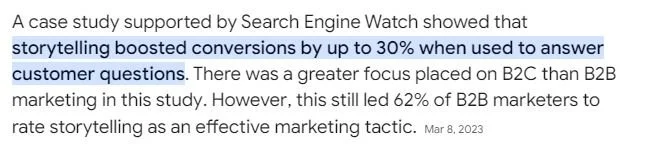
Research has shown that storytelling has a much greater impact on customer behaviour than the type of copywriting based on features (without benefits) or copywriting combining features and benefits of a product or service.
Search Engline Watch says on the power of storytelling to convert the following:
STORYTELLING CAN BOOST CONVERSION RATES BY 30% AND MAKES IT MORE LIKELY YOUR TARGET WILL BUY FROM YOU.
Where’s the STORY in this hotel copywriting?
So, if you look at this hotel copy:

taken from a hotel website originally in Croatian (will of course find an originally English example, see below), you’ll feel totally neutral and disinterested when you read it out (loud).
Words like “association”, “encompass”, “carefully selected”, “acquaint” and then “legacy”, “heritage” without even saying more about the two to start building a closer relationship between the hotel and the potential guest, do not produce an effect in the reader to say: “Wow! That’s interesting! We should travel there!”
The copy above doesn’t even speak to reader! It’s like reading a text by a property agent, who just talks about what you can see ahead, not even asking the question: What do you think? Or a more complex question: How would you feel about living here?
The first step towards STORIES IN COPYWRITING would be cutting the words above which obstruct simplicity.
But that won’t bring us very near to the desired outcome stories achieve in copywriting.
There’s the issue with the PERSON in the above hotel copy: the copy is in the 3rd person.
It takes the perspective of objectivity.
It doesn’t include YOU.
Here’s another bit of hotel copy. I’ve cut this one bit out to show you what changes if you out YOU inside the copy:
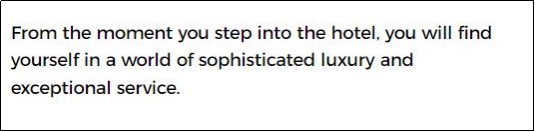
This sounds like a scene.You can picture it better than the text that preceded it.
And the “world of sophisticated luxury and ...” is actually described later on in the text.
Contrary to the 1st copy which just states, but doesn’t explain.
So,
What do you need to immitate storytelling in copywriting?
To understand storytelling, take a look at this copy of a Dutch hostel:
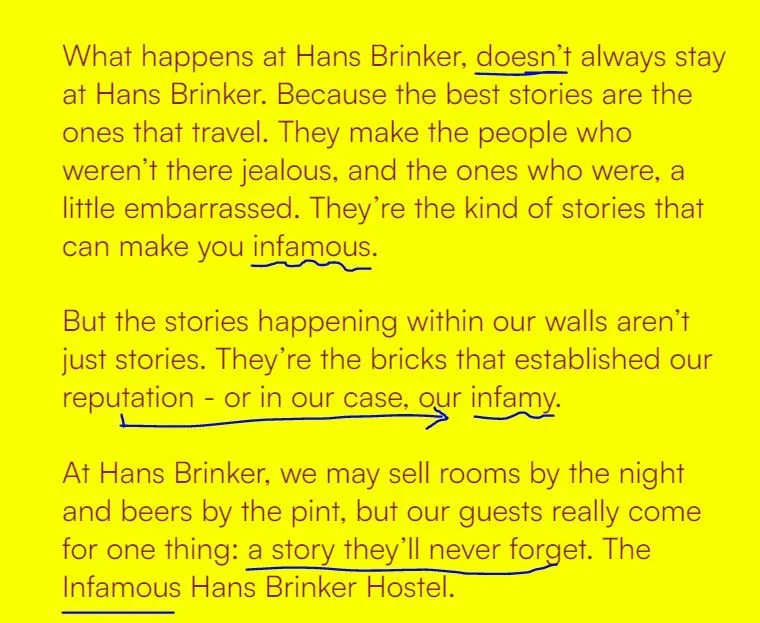
You notice the word “story” cropping up in the copy above?
And the reference to : What happens in Rome, stays in Rome?
Well, the copy truly is much better. It flows.
Still, there’s WE to make everything complicated. So, there’s a bit of detachment in this copy.
It doesn’t come that near to the reader to become friends with.
The difference is in the aim the guest will want to satisfy when booking a room.
In the above case, the guest will want to experience so much more than just the interior of the hotel. The guest will be after stories to tell.
And the story others told of this hostel when they spent some time at it.
Because it must have been something special. The word INFAMOUS is the word which this hostel prides on.
That’s what the copy claims, at least.
So, it’s a copy relying on the power of a particular story. An individual one for each guest. Because each guest will add a different nuance to this story.
If you, for example, found interest in this hostel, it will be precisely because you feel intrigued to find out what stories you’ll experience by booking a room here.
The ingredients of a good story in this copywriting example
We’ll take the ingredients from the Dutch example:
1. Include a person in the story (don’t use WE, although the copy does use it)
2. Tell what that person did using that service or product(although here it’s all very vague, and this vagueness adds to the secret vybe around the hostel), but don’t be specific, say how that person felt
3. The feeling of the person together with all the other persons who experienced the product or service will become a magnet- customers/guest will want to get a taste of it, just because it’s so quirky, strange or something you’re not supposed to tell anybody (you simply must come and see for yourself)
Every story has a hero.
The hero suffers at the start because of some difficulties.
Describe that difficulty in detail and don’t forget to add the feeling it produces when you can’t handle that difficulty. When it seems that the problem can’t be solved.
Then suddenly there’s a U- turn, but it always is due to an achievement by the hero.
Make sure you find a hero to the story of your product or service.
And make your product the solution to the hero’s problem.
Even if the problem is to find a hotel which is sustainable, cheap and close by.
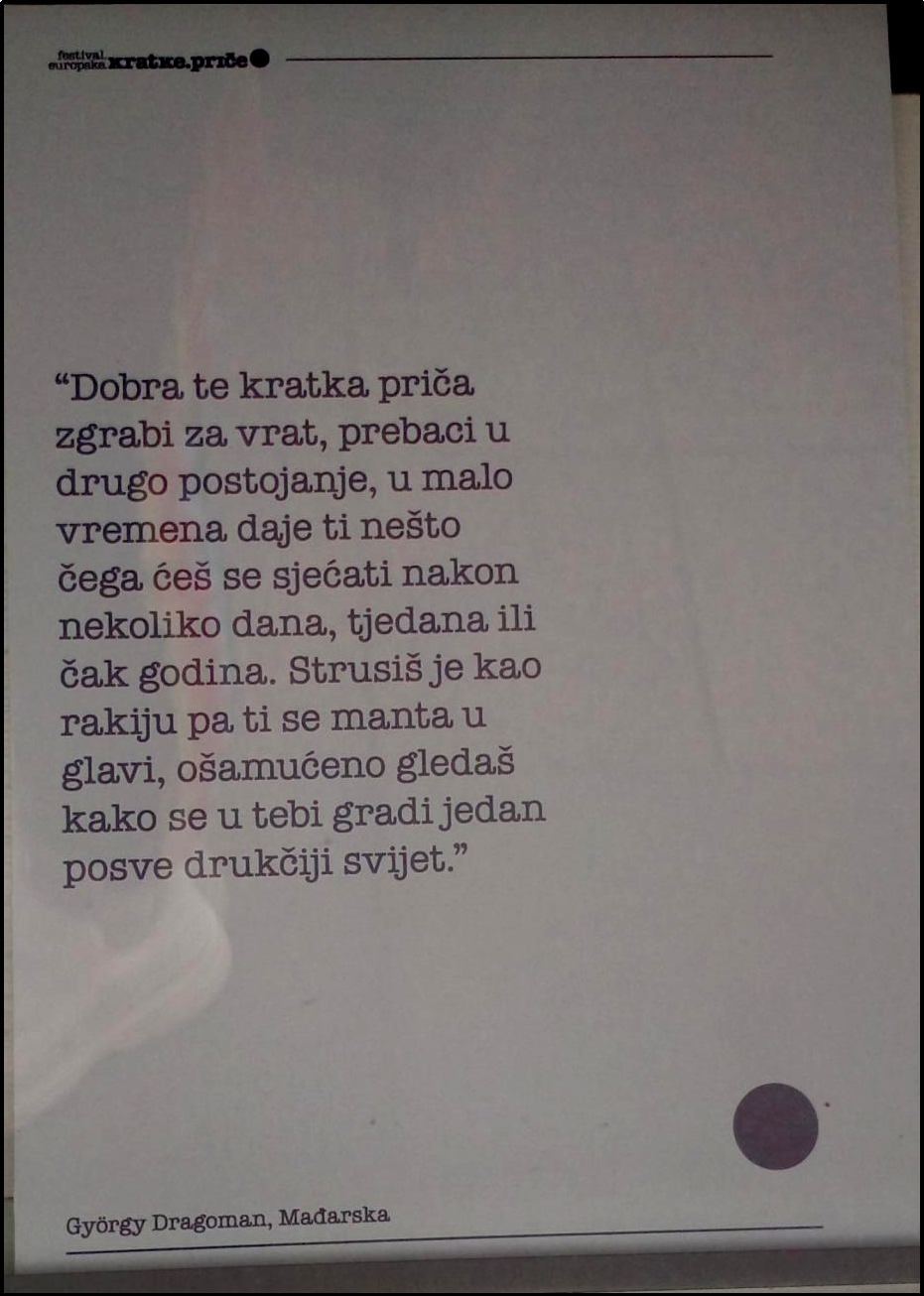
Quote from Hungarian writer György Dragomán:
“A good short story (or a story for our purpose) grabs you by the neck, transfers you into another dimension, in that short time giving you something you’ll remember after a few days, weeks or even years. You gulp it down like a fruit brandy and then it gives your head a spin, and you watch in a haze a new world building within you.”