
How to Get More Queries With an SEO-Friendly Homepage?
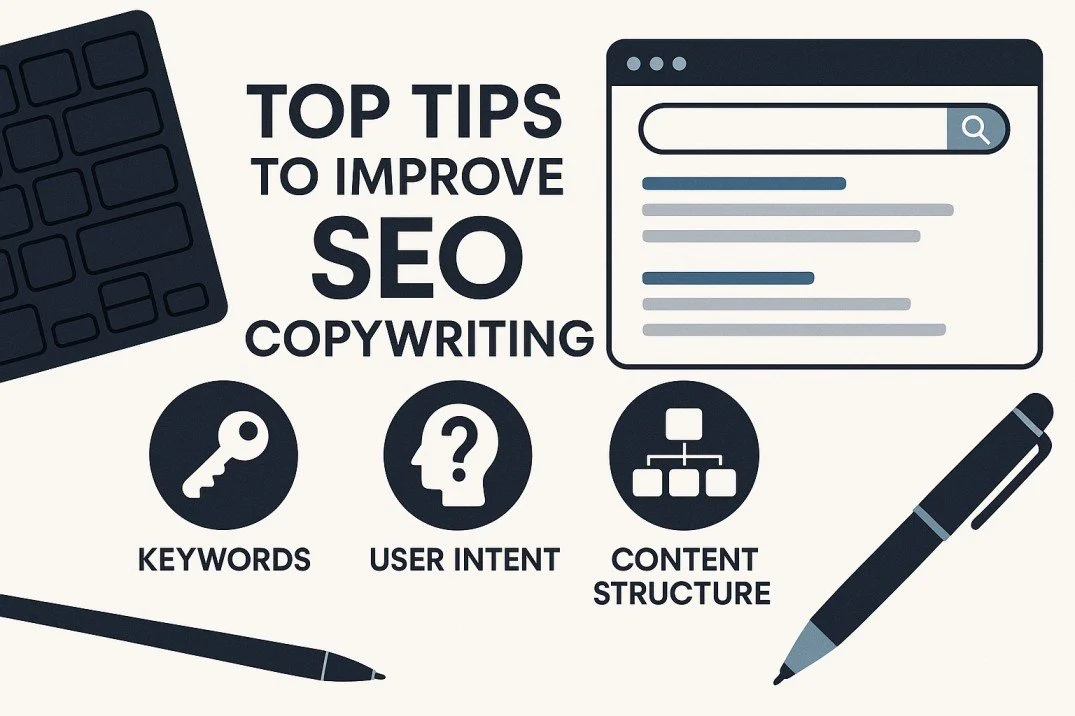
Just some of the elements crucial to get your SEO-friendly homepage right
Make Your Homepage SEO-Friendly + Interlink Your Webpages
What do I mean by the subtitle?
You have to optimise your homepage if you want to have more queries and more leads!
You need to have an SEO-friendly homepage.
What does that include?
It includes additional steps after the copywriter is done with crafting the website text.
It means enhancing the texts’ SEO, laying out the content in such a way that people landing on your website will understand it and want to learn more from it.
Getting a prospect read your website copy (content) that will provide a solution for their pain will only be possible if the prospect chooses the website over all the others listed in the search engine results (SERPS) for their query.
Or AI Overviews even.
For you to achieve that your website must appear high enough in the search results and have a title that answers their need.
To gain visibility and a good ranking on search engines, your website (homepage especially) must be SEO-optimised.
In this article, I’ll show you :
why an SEO-friendly homepage is significant
the crucial SEO elements to consider, backed by relevant research findings
Why Is an SEO-Friendly Homepage Essential? - 4 Reasons
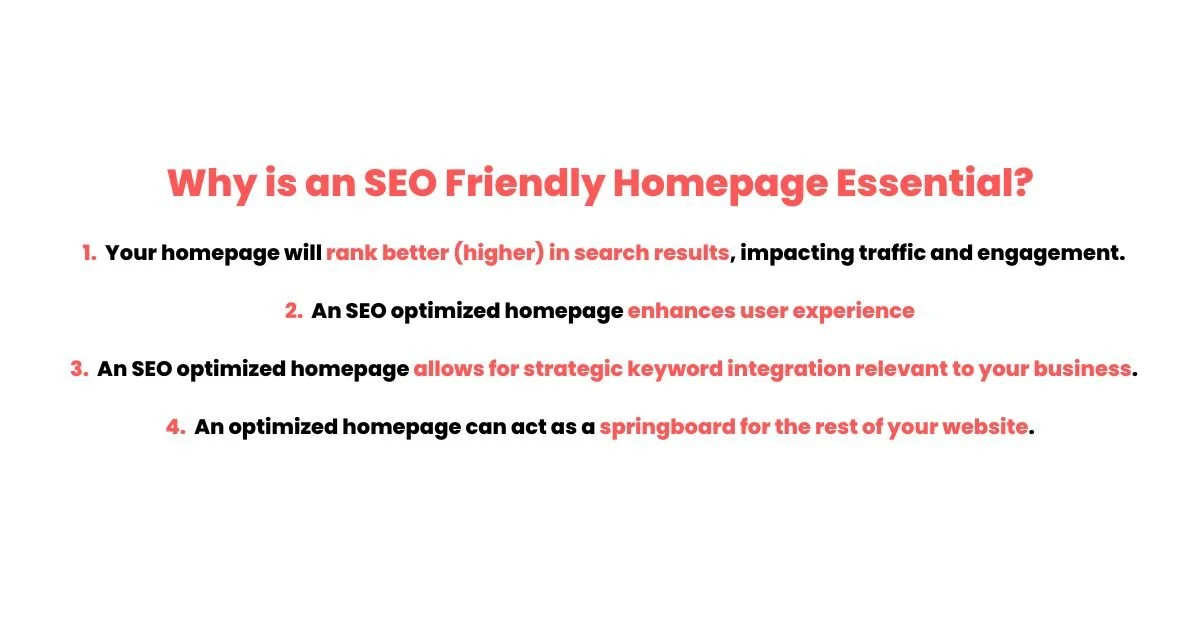
4 reasons (also described below in the text) why an SEO-friendly homepage is a MUST HAVE.
Your website will be more prominent (visible) in the search results.
66% of B2B buyers according to an B2B SEO statistics turn to internet search results when exploring products they plan to buy, rather than relying on industry publications or relevant trade shows (as shown in the image below)
This just shows how essential it is to have an SEO-friendly homepage together with all your web pages (especially the pages where you show your product).
More visibility leads to higher web traffic, attracting more potential customers.
The following table is proof of how much search results determine what potentiel clients will want to buy.
These are the most used marketing tactics to increase sales:
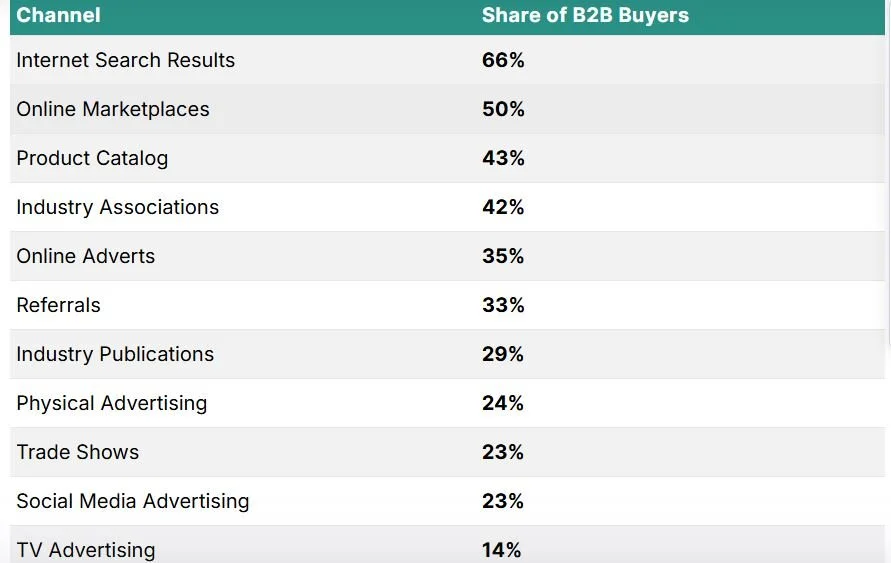
Data according to Backlinko (updated for January 2025)
Without proper optimization, your homepage may not rank well in search results, impacting traffic and engagement.
2. An SEO optimized homepage enhances user experience.
A well-structured page that loads swiftly and provides relevant content
retains visitors longer, increasing conversion chances.
This characteristic is known as off-page SEO (page loading etc.) compa-
red to on-page SEO (a service that I offer).
What does a poorly optimized homepage do?
A pooly optimized homepage:
frustrates users,
leads to higher bounce rates and
negatively affects search rankings.
3. An SEO-optimized homepage allows for strategic keyword integration relevant to your business. It makes for a powerful marketing tool.
By placing these keywords in content, headings, and meta descriptions, you improve your chances of appearing in search results when potential customers seek your services or products. This not only gets you more organic traffic, but also establishes your brand as an authority in your niche, fostering user trust.
4. An optimized homepage can act as a springboard for the rest of your website.
By incorporating clear navigation and internal links (these essential parts of on-page SEO), you guide visitors to explore other sections of your site, increasing page views and reduce bounce rates (rates of visitors exiting your site without having visited another web page apart from the page they initially visited).
This interconnected structure benefits user experience and signals to search engines that your site is valuable and relevant, enhancing your overall SEO strategy.
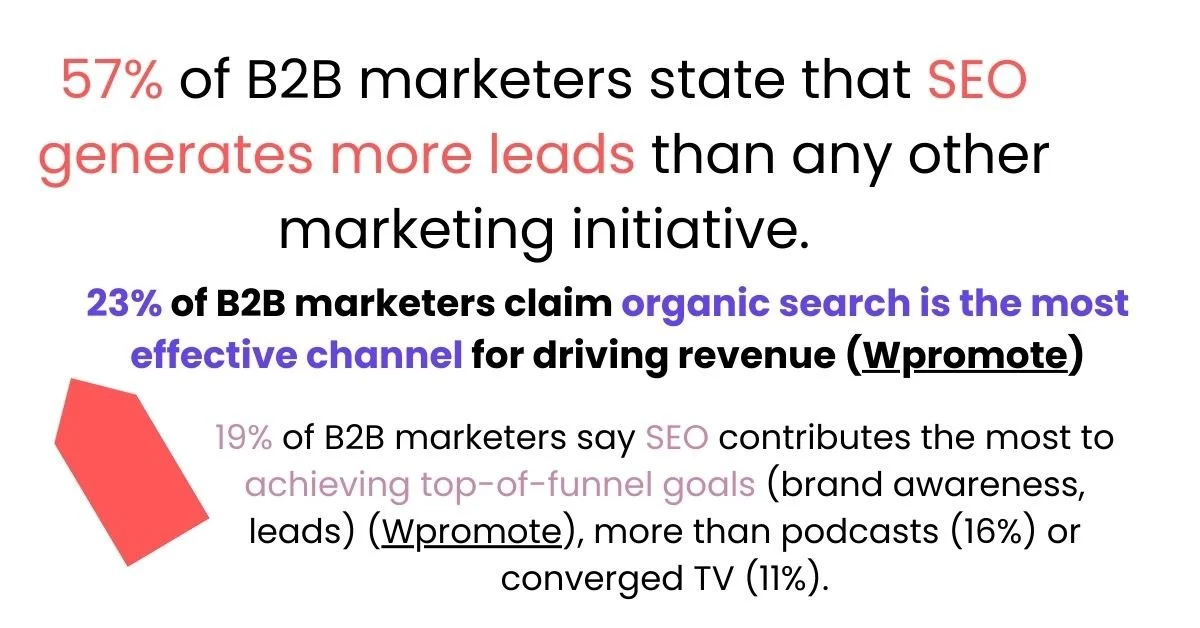
Here are reasons (figures obtained from Wpromote) which point to the fact that you shouldn’t disregard SEO as a marketing tool.
In the end, you show that you care to provide a quality service. But before all that, you made all the effort to create a seamless user experience, which will inevitably earn your clients’ trust.
The Role of Keywords on an SEO-Optimized Homepage
Keywords are the cornerstone of SEO.
They help search engines understand your homepage content, directing relevant traffic to your site.
You can significantly improve your homepage’s search visibility if you include the right keywords in strategic locations.
How to Include the Right Keywords for an SEO-Friendly Website?
You can start by conducting thorough keyword research to identify terms and phrases your target audience uses.
Tools like Google Keyword Planner or SEMrush can help find competitive keywords related to your industry.
Analyzing search intent is also crucial; understanding whether users seek information, make a purchase, or require a service helps tailor your content effectively. This insight allows you to create content that resonates with your audience and meets their needs, leading to higher engagement and conversion rates.
Once you have a list of relevant keywords, incorporate them naturally into your homepage content.
Avoid keyword stuffing, as it can lead to search engine penalties.
Instead, focus on creating high-quality content that offers value to readers while seamlessly integrating your keywords.
Consider using variations of your primary keywords and related terms to enhance semantic relevance, making your content richer and more appealing to both users and search engines.
Key Components of an SEO-Friendly Homepage - A List
Creating an SEO-optimized homepage (video) involves multiple elements working together to enhance visibility and user experience. And it’s not just the homepage that must conform to a set structure to be more optimized.
You direct traffic from the homepage to other key pages on your website (Service page, About page), so it’s understandable that other sections on your website also have to go through SEO optimization. Your blog section has to be SEO-optimized too.
Here are some key components to focus on when you want SEO-friendly content on your website:
Meta Description: Though it doesn’t directly impact rankings, a compelling meta description can increase click-through rates. Summarize your homepage in a few sentences while including relevant keywords. Use action-oriented language to encourage users to visit your site, and consider A/B testing different descriptions to see which performs best.
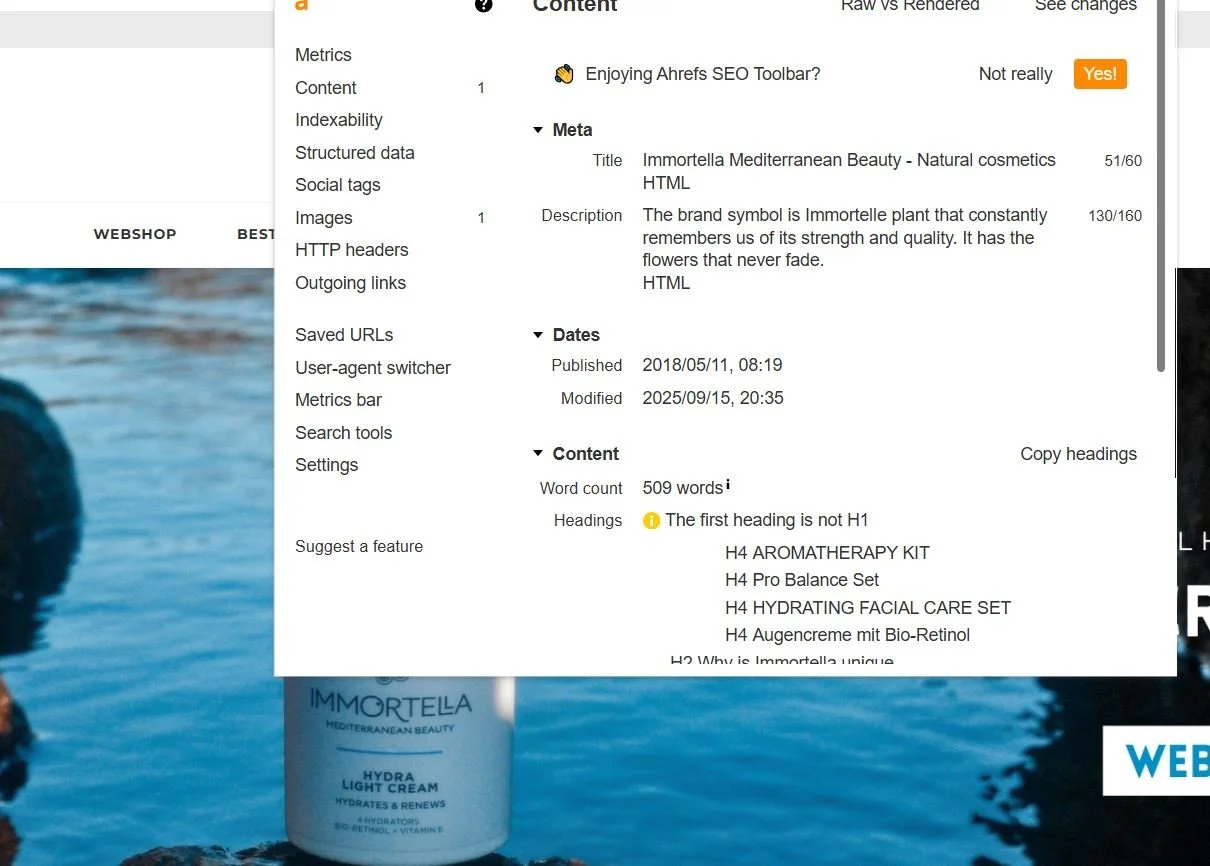
Meta Description done fairly well here
Header Tags (H1, H2, H3): Use header tags to structure your content logically. This not only helps search engines crawl your site but also improves readability for users. Properly formatted headers can guide visitors through your content, making it easier for them to find the information they’re looking for.
Internal Links: Link to other relevant pages on your website. This helps visitors navigate your site and allows search engines to understand the hierarchy of your content. Internal linking can also distribute page authority throughout your site, enhancing the SEO performance of less visible pages.
Images and Alt Text: Use images to make your homepage visually appealing, and don’t forget to include descriptive alt text. This aids accessibility and helps search engines index your images. Additionally, optimized images can improve load times, which is a crucial factor for user experience. The image size should be below 250 KB.
Mobile Optimization: With more users accessing the web via mobile devices, ensure your homepage is mobile-friendly. A responsive design can significantly enhance user experience across all devices. Consider testing your homepage on various screen sizes to ensure that all elements display correctly and are easy to interact with.
Page Speed: Fast-loading pages (smaller image sizes) are favored by both users and search engines. Optimize images, reduce redirects, and leverage browser caching to improve your homepage's load speed. Tools like Google PageSpeed Insights can provide actionable recommendations to enhance your site's performance.
By integrating these elements cohesively, you can create a homepage that not only attracts search engine crawlers but more importantly, engages and retains your visitors. Additionally, regularly updating your content (update blog articles older than 6 months) and keywords based on analytics can keep your homepage relevant and aligned with evolving search trends.
In conclusion, an SEO-friendly homepage is crucial for your website's success.
It improves visibility, enhances user experience, and ultimately drives conversions.
By focusing on essential elements such as keyword integration and site structure, you can create an effective homepage that meets both user and search engine needs.
Start optimizing today to reap the long-term rewards of an SEO-optimized homepage!
Build an SEO-Friendly Website with Tralangia
At Tralangia, I’m committed to boosting your website's performance with top-notch copywriting, SEO strategies, and a LinkedIn presence.
Don't miss out on the opportunity to captivate your audience and amplify your online visibility.