
Effective hotel copywriting tips to attract more visitors
Effective hotel copywriting as the result of monitoring consumer behaviour
Imagine you’re fairly new in the hotel business.
There’s a website for your hotel. The agency has done a great job creating a visually stunning website.
Each section on your homepage presents the hotel in the best possible light. And you have pages with photographs and videos of the interior.
The copy is there too - the necessary introduction about the hotel, the location, the history of the place and the features that make your hotel utterly desirable.
But there are no clicks to your website. How to make the copywriting more effective?
It’s very probable that it’s not the pictures, and not the videos that fail to attract.
It’s either the bad flow and order of the information or the poor copywriting on the hotel website.
How to remedy that?
Will you work with the copywriter who created the copy first?
If the fault is with the copy, how to make it more effective and start reaping more website visits, and with that more bookings?
It’s important to scan the hotel copy very meticulously.
Go through the wordings, the propositions, features, the copy that acts as a caption for the photos, the copy for the CTA buttons (the button that invites hotel website visitors to make an action, e.g. Have a seat in our bar and enjoy a drink on us!, this you’ll probably rarely see on a hotel website, and it could be even a winning tactic)
Let’s try to find these copy mistakes together.
Let’s have a closer look and see where the fault lies.
1. DULL AND UNINVITING COPY
Add more vibrancy, liveliness and more flavour to the hotel copy
Tell a story of the surrounding and the hotel that captivated the guest.
A story that produces an interest, making the guest want to visit the place as soon as possible.
Create an urge which can’t be postponed. Create that with an offer no other hotel in that place has. Let that offer be the star of the moment. And introduce that offer with a copy that arouses immediate interest.
The copy is a text not on the website only. It can also be found in the meta description on any page of the (hotel)website. So, pay more attention to how you craft your copy for that spot.
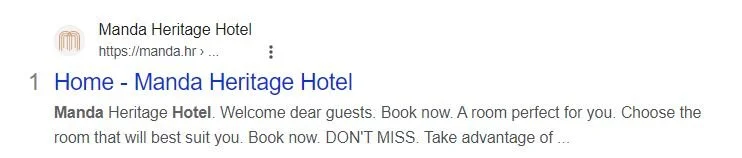
Meta description of a Zagreb hotel
This is a hotel in the Croatian capital, Zagreb. You can see their meta description as it shows in the Google results. Although it’s not a text taken from their website, this description certainly is not something that will make the potential guest rush to book. Why? Exactly because the copy is uninviting, drab, and without any extra that would kindle the guest’s interest.
SUGGESTION: As it is a heritage hotel, why not elaborate on that in meta description?
2. THE COPY doesn’t speak directly to the potential visitor/audience
It’s the register and style that is either not consistent or it fails to address the guest in the proper way. It could be either too direct or too distant.
What I mean by that is that the website copy fails to build a relationship with the reader/potential visitor.
It doesn’t address the reader.
It speaks in WE’s and OUR’s, leaving the reader cold.
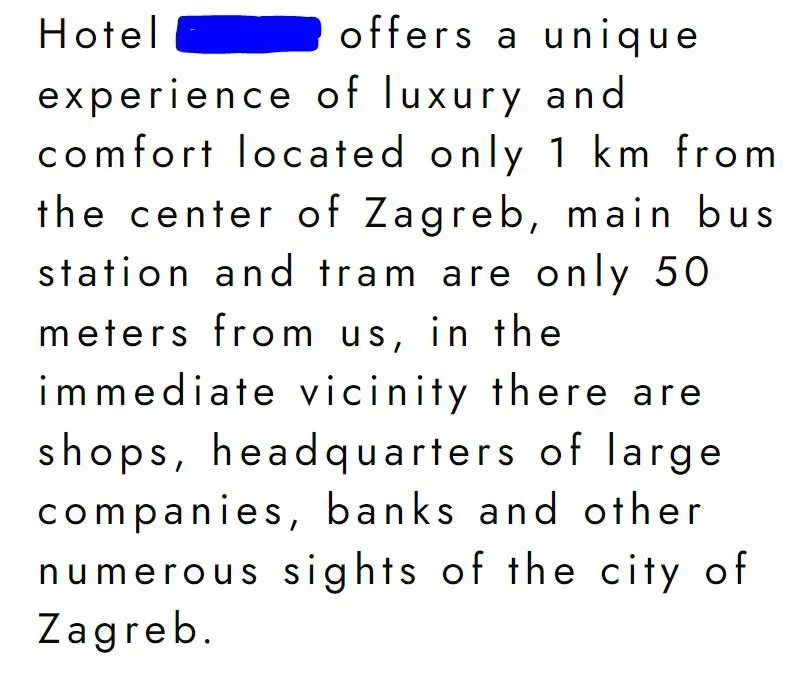
This is another hotel in Zagreb.
The copy is on the homepage of this hotel.
As you can see, it starts with a benefit (offers a unique experience of luxury), and doesn’t continue on that, but abruptly changes direction and tells you more about the location. The location can also be a good point to stress, but better location data in the footer.
The copy that you first see on the homepage doesn’t build any relationship with the reader!
(not to mention a mistake with the missing article “the” in front of hotel, right at the beginning of the sentence, which tells you that the copy had been obviously written by a non-native English copywriter!)
How much different is this copy from the previous two?

Effective hotel copywriting as it should be done - no more WE’s in the copy, a delightful story to tell, with pointing out at least why you shouldn’t miss spending time in this hotel
The story is introduced with a conversational tone. This “nothing beats” signals that the copywriter is convinced of the quality of the hotel, and the copy doesn’t just stop at naming the experience "unbeatable"; it tells you more about it, by letting you imagine how it is to spend at least a night at this hotel.
I’ve mentioned 2 ways how to make hotel copywriting more effective.
All these come from studying consumer behaviour.
What is consumer behaviour in the hotel industry?
Consumer behaviuor simply tells you what consumers/hotel guests think is important in order to make a choice and act on it - buy or book.
It’s the guests who make the decision based on the offer they get.
They decide whether the offer is irresistible, whether they will pay for it, all based on their expectations.
So the copy must answer their expectations. The hotel copy must meet their high demands.
What they consider important depends on their family background, their social image and reputation, their habits and needs at a particular moment. And consumer behaviour does change a lot with time.
Hoteliers must understand and adapt to these changes to remain competitive and meet guest expectations.
I’ve stumbled across an interesting post recently on Linkedin by an English jeans manufacturer, who shared his thoughts on how he decides which hotel to book.
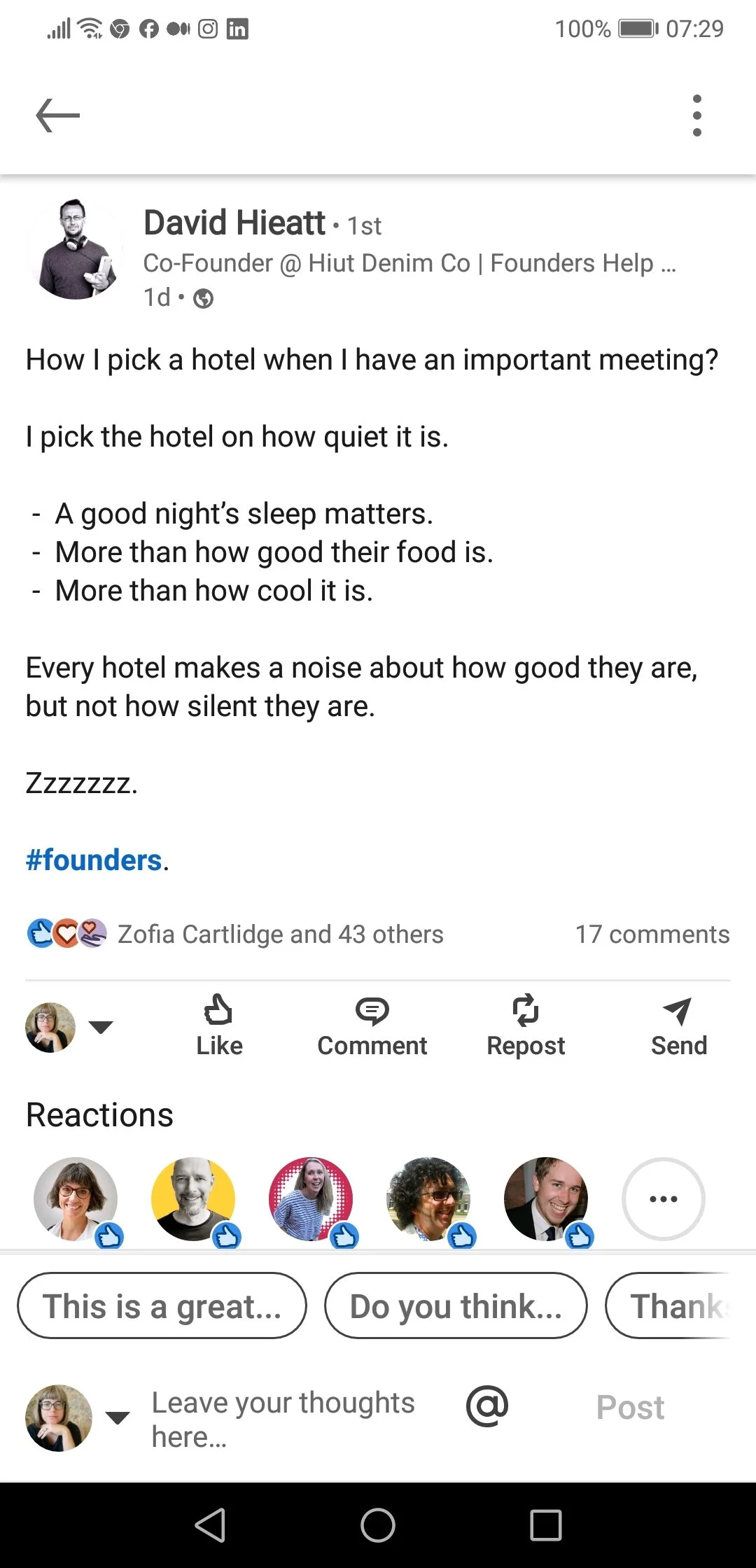
When a hotel guest wants to find a hotel to hold a meeting, then there’ll be certain aspects at play which will help him/her make the right decision.
Effective hotel copywriting is achieved when you pay attention to consumer behaviour.
In the above case it would be important how silent the hotel is.
How effective a hotel’s copywriting is, depends whether the hotel can satisfy the guest’s need for a silent environment. The copy must certainly stress that one point. And that could make a great difference.